Showing: 1 - 3 of 3 RESULTS
Digital Marketing Technology

Choosing the Best AI SEO Writing Platform for Your Business

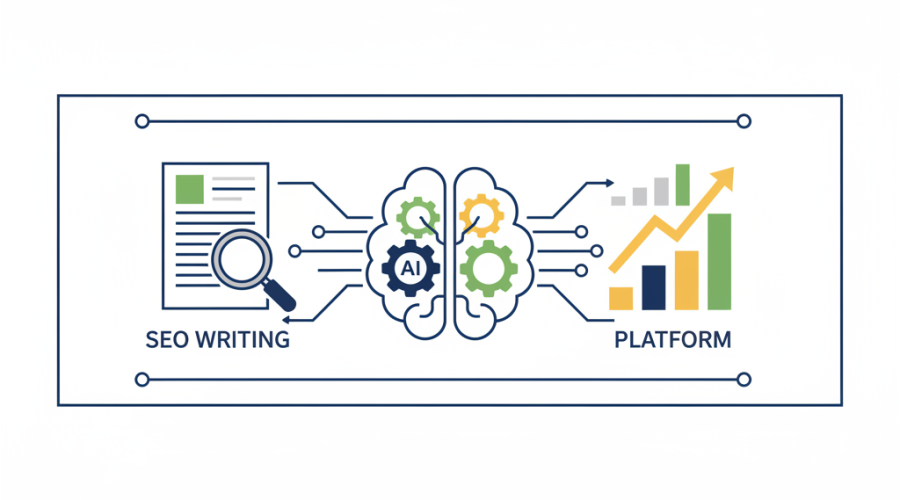
AI SEO writing platform — featured illustration and overview

Your keyboard is a slot machine. Every time you hit publish, you’re betting your brand’s reputation on an algorithm that changes its mind more often than a toddler at a toy store. Finding the right AI SEO writing platform isn’t just about avoiding the “I’m sorry, I can’t do that” errors of yesteryear. It’s about survival in a digital ecosystem where search engines now prioritize deep relevance over simple word counts. If your current tool just spits out generic paragraphs, you’re not competing. You’re just making noise. It’s time to find a partner that actually understands the math behind the clicks.

Why Is Choosing the Right AI SEO Writing Platform Critical in 2026?

The game has changed. We’ve moved past the era of mass-produced fluff into a period of extreme precision. Search engines in 2026 don’t just look for keywords. They look for information gain and unique perspectives that a basic chatbot cannot provide. An AI SEO writing platform must now act as a strategist, researcher, and editor all at once. If you choose a tool that lacks live data integration, you’re writing for a world that no longer exists.

Visibility is expensive. Organic traffic remains the highest ROI channel for most businesses. But the barrier to entry has skyrocketed because everyone has access to basic AI. To stand out, your platform needs to do the heavy lifting of data-driven optimization before the first sentence is even written. It’s the difference between guessing what works and knowing exactly what the algorithm wants to see.

Does AI Writing Help or Hurt Organic Ranking in Current Search Engines?

Quality is the only metric. Google and other major search engines have made their stance clear: they reward helpful content regardless of how it’s produced. They don’t punish AI. They punish boring, repetitive, and unhelpful pages that offer nothing new to the reader. If your AI SEO writing platform produces “hallucinations” or outdated facts, your rankings will tank. But if you use NLP content writing tools to enhance depth and accuracy, you’ll see a massive lift in authority.

Context matters most. Modern algorithms use advanced neural networks to determine if a page actually solves a user’s problem. Purely automated sites that ignore user experience are being wiped out in monthly core updates. You need a tool that prioritizes Search intent analysis AI to ensure every paragraph serves a specific purpose. High-quality AI content is now indistinguishable from human writing. In fact, it’s often more structured and data-rich.

The Shift From Traditional SEO Software to AI-Native Platforms

Legacy tools are slow. Old-school SEO suites were built for a world of manual backlink checking and static keyword tracking. They’ve tried to bolt on AI features, but the experience is clunky and disconnected. AI-native platforms are built from the ground up with Large Language Models (LLMs) at their core. These tools don’t just tell you that you need more “latent semantic indexing” keywords. They actually write them into the flow of your prose naturally.

Integration is everything. AI SEO writing tools vs traditional SEO software is no longer a fair fight. Modern platforms offer real-time SERP analysis AI that looks at what’s ranking right this second. They see the shift in search intent before the traditional tools even update their databases. You’re getting a live look at the battlefield. This allows you to pivot your content strategy in minutes rather than weeks.

What Are the Must-Have Features in an AI SEO Platform for 2026?

Features define your speed. You can’t afford to spend four hours on a single blog post anymore. Your AI SEO writing platform must automate the tedious parts of the job while leaving you in control of the creative direction. Look for tools that offer automated SEO content briefs that include everything from header structures to recommended internal links. Without these, you’re just staring at a blank page with a fancy autocomplete. Efficiency is the only way to scale content without losing your mind.

Real-Time SERP Analysis AI and Competitive Benchmarking

Static data is a trap. The search results for a high-value keyword can change in an afternoon. Your AI SEO writing platform must scrape the current top 10 results to see exactly what’s working right now. It should analyze the average word count, the number of images used, and the specific questions being answered by your competitors. This isn’t about copying them. It’s about finding the gaps they missed. If everyone is talking about “how to,” maybe you should talk about “why not.”

Benchmarking is vital. You need to know exactly how your draft stacks up against the current winners. A good AI SEO writing platform provides a real-time score that updates as you write. It should flag if you’re missing a critical subtopic that every other ranking page includes. This ensures you never publish a piece of content that is “thin” in the eyes of a search engine. You’re playing to win, not just to participate.

Automated SEO Content Briefs and Semantic Requirements

Structure saves time. Manually creating a content brief used to take an hour of research. Now, an AI SEO writing platform can generate a comprehensive outline in thirty seconds. These briefs should include AI tools for topic clusters suggestions to help you build topical authority. They should also list the exact semantic terms you need to include to satisfy the algorithm’s requirements. This takes the guesswork out of the writing process. You just follow the roadmap.

Precision is key. A great brief doesn’t just list keywords. It explains the intent behind them. It tells you if the user is looking for a quick answer or a deep-dive guide. If your platform doesn’t distinguish between these, you’ll end up with content that doesn’t convert. Automated SEO content briefs act as the bridge between your SEO strategy and your writing team. They keep everyone on the same page without the need for endless meetings.

NLP Content Writing Tools for Better Search Relevance

Language is complex. NLP content writing tools use Natural Language Processing to make your writing feel more human and relevant. They help you avoid “keyword stuffing” which is a relic of the past. Instead, they suggest related entities and concepts that prove you’re an expert on the subject. If you’re writing about “electric cars,” the AI should prompt you to mention “kilowatt-hours” and “regenerative braking.” This is how you build trust with both readers and robots.

Relevance is the goal. Search engines use models like BERT and Smith to understand the nuances of your sentences. Your AI SEO writing platform should be just as smart. It should help you vary your sentence structure and use active voice to keep readers engaged. Better engagement leads to longer dwell times. Longer dwell times lead to higher rankings. It’s a virtuous cycle that starts with better language processing.

AI SEO writing visual example and applications

How Do You Evaluate AI Writing Tools for SEO Accuracy?

Trust but verify. Not all AI SEO writing tools are created equal. Some are just wrappers around cheap APIs that produce repetitive, low-quality text. You need to put any potential platform through a rigorous testing phase. Check for how it handles complex topics and whether it can maintain your brand’s unique voice. If the output sounds like a dry textbook, your audience will bounce. You need flair as much as you need facts.

Testing for Fact-Checking and Hallucination Mitigation

AI lies sometimes. It’s a well-known issue called hallucination where the model confidently states something that is completely false. Your AI SEO writing platform must have built-in safeguards or fact-checking integrations. Even with these, a human-in-the-loop is still necessary for high-stakes content. You should test the tool by asking it to write about a niche topic with specific data points. If it makes up statistics, it’s a liability. Accuracy is the foundation of your brand’s authority.

Verification is non-negotiable. Use a tool that cites its sources whenever possible. This allows your editors to quickly check the original data without hunting through Google themselves. A platform that offers real-time SERP analysis AI is usually better at this because it’s pulling from live web pages. Don’t let a “smart” tool make your brand look “stupid.” One bad fact can ruin years of built-up trust with your audience.

Assessing the Quality of AI SEO Tools for Semantic Search Optimization

Keywords are dead. Long live entities. AI SEO tools for semantic search optimization focus on the relationships between ideas. When evaluating a tool, see if it suggests “related topics” rather than just “related keywords.” If you’re writing about “remote work,” does it suggest “asynchronous communication” and “digital nomad visas”? This shows the tool understands the broader context of the conversation. It’s the difference between a surface-level summary and an expert guide.

Context is king. Semantic optimization ensures that you’re answering the questions users haven’t even asked yet. It anticipates their next move. A high-quality AI SEO writing platform will help you map out these connections. This makes your content more “sticky” and useful. It also tells search engines that you’re a comprehensive source of information. That’s how you win the featured snippet and the top spot.

Which AI SEO Platform Is Right for Agencies vs. In-House Teams?

Scale dictates choice. An agency managing fifty clients has very different needs than a solo founder building a niche site. Agencies need AI SEO workflow automation to handle high volumes of content without hiring an army of writers. In-house teams might prioritize deep integration with their specific brand voice and product data. You must choose a platform that fits your current operational reality while allowing for future growth. Don’t buy a Ferrari if you only need to drive to the grocery store.

Selecting an AI SEO Platform for Agencies to Manage Multiple Clients

Agencies need speed. When you’re juggling multiple industries, you can’t be an expert in everything. An AI SEO writing platform for agencies should offer multi-user access and robust project management features. Look for “white-label” reporting options that let you show off the results to your clients. You also need the ability to create custom “style guides” for each client. This ensures the AI doesn’t use the same tone for a law firm as it does for a pet store.

Bulk is the word. The ability to generate dozens of automated SEO content briefs at once is a game-changer for agency margins. You can move from strategy to execution in a fraction of the time. But you also need quality control. Choose a platform that allows for easy collaboration between your SEO strategists and your content editors. Writer SEO – the best AI SEO content writer is a great example of a tool that balances high-volume output with high-quality standards. It’s built for the demands of modern digital marketing.

AI SEO Workflow Automation for Lean Content Teams

Efficiency is power. If you’re a small team, you’re likely wearing five different hats. You don’t have time to manually optimize every meta description. AI SEO workflow automation can handle the repetitive tasks like internal linking suggestions and image alt-text generation. This frees you up to focus on the big-picture strategy. You can produce the output of a team five times your size. It’s the ultimate equalizer for small businesses.

Automation isn’t “set it and forget it.” It’s about augmenting your existing skills. Use on-page SEO AI assistants to quickly refresh old blog posts that are slipping in the rankings. This allows you to maintain your traffic with minimal effort. A lean team should look for a platform that is easy to learn and quick to deploy. You don’t want to spend three months in “onboarding” when you could be ranking today. Simplicity is a feature.

How Can AI Content Optimization Software Improve Existing Rankings?

New isn’t always better. Sometimes the fastest way to grow your traffic is to fix what you already have. AI content optimization software can analyze your existing pages and tell you exactly why they aren’t ranking in the top three. Maybe you’re missing a key section, or your readability score is too low. These tools provide a clear checklist of improvements. It’s like having a professional editor and an SEO consultant looking over your shoulder.

Using AI Tools for Topic Clusters and Pillar Page Strategies

Authority is earned. You can’t just write one great article and expect to rank for a competitive term. You need a web of related content that proves your expertise. AI tools for topic clusters help you visualize these connections. They suggest “supporting” articles that link back to your main “pillar” page. This creates a powerful internal linking structure that search engines love. It shows that you have covered every angle of a subject.

Strategy beats tactics. A pillar page strategy helps you capture “long-tail” traffic while building the power to rank for “head” terms. Your AI SEO writing platform should help you identify which topics are worth building a cluster around. It should analyze search volume and competition to find the “low-hanging fruit.” By dominating a specific niche, you make it much harder for competitors to displace you. You’re building a moat around your rankings.

Leveraging On-Page SEO AI Assistants for Rapid Updates

Speed wins races. When a new competitor enters your space, you need to react quickly. On-page SEO AI assistants allow you to update your titles and headers in seconds. They can suggest more compelling “hooks” that improve your click-through rate (CTR). A higher CTR tells search engines that your result is more relevant than the others. This can lead to a “rank boost” even without changing the main content. It’s all about the small wins.

Details matter. Don’t forget about your meta descriptions and schema markup. A good AI SEO writing platform will handle these technical details for you. It ensures your “rich snippets” are correctly formatted to show up in the search results. This makes your listing more attractive and professional. Small tweaks can lead to big jumps in traffic. Never underestimate the power of a well-optimized H2 tag.

Can AI Writing Tools Handle Complex Search Intent Analysis?

Intent is everything. If someone searches for “best running shoes,” they’re looking to buy. If they search for “how to choose running shoes,” they’re looking for information. Your AI SEO writing platform must be able to tell the difference. Search intent analysis AI looks at the current SERP to see what kind of content Google is rewarding. If you provide a product page when the user wants a guide, you’ll never rank. The AI helps you align your content with the user’s psychological state.

Matching Different Types of Search Intent with AI

Know your “why.” There are four main types of search intent: informational, navigational, commercial, and transactional. Your AI SEO writing platform should allow you to “toggle” between these modes. For an informational post, the AI should focus on clarity and depth. For a transactional post, it should focus on benefits and calls to action. If your tool treats every keyword the same, it’s failing you. You need a platform that understands the nuances of the buyer’s journey.

Contextual cues are vital. The AI should look at the “People Also Ask” section to see what specific questions users have. It should then weave those answers naturally into your content. This ensures you’re meeting the user’s needs at every stage. By providing a comprehensive answer, you reduce the “bounce rate” and increase the chance of a conversion. It’s not just about getting the click. It’s about keeping the reader.

Tailoring AI Writing for Local SEO and Geo-Specific Growth

Location is power. If you’re a local business, you don’t need to rank globally. You need to rank in your city. AI writing for local SEO helps you incorporate regional keywords and landmarks naturally. It can help you create specific landing pages for different neighborhoods without sounding repetitive. This is essential for service-based businesses like plumbers or lawyers. You need to sound like a local expert, not a generic national brand.

Growth is regional. Use your AI SEO writing platform to analyze the local competition. See what “local entities” they’re mentioning. Maybe they’re talking about the local high school or a famous park. By including these references, you prove to search engines that you’re actually part of the community. This builds local authority and helps you dominate the “map pack.” Local SEO is a different beast, and your AI needs to be up to the challenge.

What Is the Conclusion and Next Steps for Your SEO Strategy?

The future is here. Choosing an AI SEO writing platform is the most important decision you’ll make for your digital marketing this year. You need a tool that combines deep data analysis with high-quality natural language generation. Don’t settle for a basic writer when you can have a full-scale SEO partner. The goal is to create content that is better than what a human could do alone. By leveraging the power of AI, you can achieve rankings that were previously out of reach.

Final Comparison: AI Writing Tools vs Traditional SEO Software

Hybrids are best. While AI SEO writing tools are powerful, they haven’t completely replaced traditional software yet. You still need tools for deep backlink analysis and technical site audits. The best strategy is a hybrid approach. Use your traditional tools to find the opportunities and your AI SEO writing platform to execute them. This gives you the best of both worlds. You get the data-driven insights of the past with the automated efficiency of the future.

Balance is key. Don’t let your tools do all the thinking for you. Use them to enhance your creativity, not replace it. The most successful brands in 2026 are those that use AI to handle the “grunt work” while humans provide the “soul” of the content. This combination is unbeatable. It creates content that is both mathematically perfect for search engines and emotionally resonant for human readers.

Take Action: Start Your AI Content Transformation Today

Don’t wait. Your competitors are already experimenting with these tools. If you wait another six months, you’ll be years behind. Start by auditing your current tech stack. See where the bottlenecks are in your content production. Is it the research? The writing? The optimization? Once you identify the pain points, trial an AI SEO writing platform that solves those specific problems. Many offer free trials or low-cost entry points. There’s no excuse for staying in the past.

Commit to quality. Set a goal to refresh ten of your top-performing pages using AI content optimization software this month. Watch the results. You’ll likely see a bump in rankings and engagement almost immediately. This will give you the confidence to scale your efforts across your entire site. The era of manual SEO is over. Welcome to the age of AI-driven growth. Your future traffic is waiting for you to take the first step.

Technology

The Core Capabilities of Building an AI Platform with Lovable

Your laptop screen glows at 2 AM. A brilliant idea for an AI platform is scribbled on a napkin next to you. You need to know if Lovable can actually turn that sketch into a live, breathing application without a massive engineering team. It’s the question every modern founder asks before they commit their time. You aren’t just looking for a prototype or a toy. You want a production-ready AI platform that scales, stays secure, and keeps your users happy. The short answer is yes. But the long answer is where your competitive advantage lives. This guide breaks down exactly how Lovable handles the heavy lifting of building, managing, and hosting your AI platform in 2026.

The Core Capabilities of Building an AI Platform with Lovable

Building a platform starts with the frontend. Lovable excels at generating sophisticated user interfaces from simple natural language prompts. You describe the layout. It builds the code. This isn’t just a basic drag-and-drop tool because it generates clean, high-performance code that you can actually own. Most founders start by defining their core user journey. They want a dashboard where users interact with an AI model. Lovable creates these complex views instantly. It handles the state management and the visual logic that usually takes weeks to code by hand. You see the changes in real-time. It’s fast. It’s intuitive. It’s the fastest way to get from a concept to a functional web application.

The platform doesn’t stop at buttons and menus. It understands how to integrate with the AI backends you need. Whether you’re using OpenAI, Anthropic, or DeepSeek, the tool structures the API calls perfectly. You don’t have to worry about writing the boilerplate code for JSON parsing or error handling. Lovable handles the connection between your user’s input and the AI response. This allows you to focus on the prompt engineering and the unique value of your service. It’s a shift from being a coder to being an architect. You direct the vision. The tool executes the technical details. You get a custom AI platform that looks and feels like it was built by a senior dev team.

Designing for User Experience

User experience is the lifeblood of any SaaS platform. If your AI tool is hard to navigate, people will leave. Lovable uses shadcn/ui and Tailwind CSS to ensure everything looks modern and professional. You can ask for dark mode. You can request responsive designs that work on mobile phones and desktop monitors. The AI frontend builder understands context. If you tell it you’re building a medical AI assistant, it chooses clean, trustworthy layouts. If you’re building a creative writing tool, it can go for something more vibrant. The flexibility is unmatched in the no-code or low-code space. You aren’t stuck in a template. You are in control of every pixel.

Iterative Development at Speed

Speed is your only real currency in the AI race. Lovable allows for rapid prototyping that evolves into a final product. You don’t build once and stop. You iterate every hour. You see a bug in the user flow and you describe the fix. The AI agent updates the code immediately. This feedback loop is what makes Lovable different from traditional agencies. You don’t wait for a sprint to end. You launch features as fast as you can think of them. This is how you beat incumbent companies. You move faster than their meetings can happen.

How Lovable Cloud Handles Your Data and Backend

A platform is nothing without a robust backend. In late 2025, the team introduced Lovable Cloud to solve the biggest pain point for AI founders. Before this, you had to set up your own Supabase or Firebase instance manually. Now, Lovable Cloud provides a built-in managed backend. It handles user authentication out of the box. Your users can sign up. They can log in securely. Their data is stored in a managed database that Lovable sets up for you. This means you don’t need to be a database administrator to run a complex AI startup. It’s all integrated into one environment.

Security is a top priority for AI platforms. When you use Lovable Cloud, you get enterprise-grade security protocols. The system manages environment variables for your API keys. This ensures your expensive AI credits aren’t exposed to the public. The backend infrastructure is designed to scale as your user base grows. You don’t have to migrate to a new server when you hit your first thousand users. Lovable handles the serverless architecture behind the scenes. It’s invisible. It’s reliable. It’s exactly what you need to stay focused on growth.

Database Management Simplified

Your AI platform will generate a lot of data. You need to store user prompts, AI responses, and user profiles. Lovable Cloud uses PostgreSQL under the hood. This is the industry standard for relational databases. You can ask the AI builder to create new data tables or relationships. It writes the SQL for you. It handles the migrations. You just tell it what data you need to save. This visual editing of the database makes backend engineering accessible to everyone. You can build complex logic without a Computer Science degree.

Authentication and User Permissions

Not every user should see every piece of data. Lovable allows you to set up Row Level Security (RLS) easily. This ensures that User A cannot see the private AI chats of User B. The authentication system supports email/password and social logins. It’s built on top of trusted open-source standards. You get a secure login flow that would normally take a developer days to secure and test. But here, it’s a standard feature. You can even build admin dashboards to manage your users directly within the same app ecosystem.

Hosting Options for Your AI Platform

Hosting is where the rubber meets the road. Lovable offers two distinct paths for deploying your application. The first and easiest path is Lovable Cloud hosting. This is a one-click deployment solution. Your app goes live on a global CDN instantly. It’s fast for users in New York and just as fast for users in Tokyo. The platform manages the SSL certificates and custom domains. You don’t have to touch a terminal or a config file. It’s the frictionless way to launch a minimum viable product or a full-scale platform.

The second path is external hosting. Lovable is not a walled garden. You can export your code to GitHub at any time. This gives you total ownership of your intellectual property. If you want to host on Vercel, Netlify, or your own AWS infrastructure, you can. Many founders start on Lovable Cloud and move to Vercel as they grow. This flexibility is a massive advantage. You aren’t locked into one provider. You have the freedom to move your AI platform wherever it makes the most sense for your business model.

The Benefits of Lovable Cloud Hosting

  • Instant Previews: See every change on a live URL before you push to production.
  • Automatic Scaling: The infrastructure grows with your traffic spikes without manual server tuning.
  • Integrated Logs: Monitor your AI platform’s performance and error rates from one dashboard.
  • Simplified Billing: Pay for your builder and your hosting in one place.

Self-Hosting and Portability

Ownership matters to investors. If you decide to raise venture capital, they will want to know who owns the code. With Lovable, you own it. You can sync your project to a GitHub repository. This means your codebase is portable. You can hire React developers later to add custom features that the AI might not handle yet. The code is written in TypeScript and React. These are the most popular web technologies on the planet. Your tech stack is future-proof and standardized.

Handling AI Model Integrations and Logic

An AI platform is more than just a chatbox. It involves complex workflows and data processing. Lovable can handle these integrations with ease. You can connect to vector databases like Pinecone or Weaviate for RAG (Retrieval-Augmented Generation). This allows your AI to search through your company’s documents or user-uploaded files. The AI builder helps you write the edge functions or server-side logic needed to process these requests. It’s a complete development environment for AI-first applications.

You can also build multi-step AI agents. For example, you might want your platform to first summarize a document, then translate it, and finally email it to a user. Lovable manages the asynchronous tasks and loading states. Your users won’t see a frozen screen while the AI thinks. They see progress bars and real-time updates. This professional polish is what separates a side project from a real business. Lovable gives you the tools to build sophisticated logic without the sophisticated headache.

Connecting to External APIs

Your AI platform might need to talk to Stripe for payments or Slack for notifications. Lovable handles API integrations via standard protocols. You can securely store your secret keys in the project settings. The AI then uses these keys to authenticate with third-party services. You can build a billing system in minutes. You can automate workflows that bridge the gap between AI intelligence and real-world actions. This is how you build a useful tool that people are willing to pay for.

Managing AI Costs and Rate Limiting

Running an AI platform can get expensive. You need to manage your costs. Lovable allows you to implement rate limiting and usage tracking. You can see how many tokens each user is consuming. You can set limits to prevent API abuse. This level of control is vital for sustainability. You don’t want a single user draining your budget overnight. By building these guardrails into your platform, you ensure long-term profitability. The AI builder can help you design these systems from day one.

Real-World Use Cases for Lovable AI Platforms

What can you actually build? The possibilities are almost limitless in 2026. Many founders are building specialized AI writing assistants for specific industries like law or medicine. These platforms require secure document handling and precise prompting. Lovable provides the secure environment needed for these sensitive applications. Others are building AI-powered design tools that generate marketing assets or social media posts. The visual nature of Lovable makes it perfect for these image-heavy applications.

Another popular use case is internal business tools. Companies use Lovable to build custom AI interfaces for their employees. This might be an AI HR bot that answers policy questions or a sales tool that analyzes leads. Because Lovable is so fast, these internal tools can be built in days instead of months. The ROI is immediate. You save time. You save money. You empower your team with the latest technology without a massive capital investment.

AI Content Platforms

Imagine a platform that generates SEO-optimized articles based on trending topics. You can build the crawler, the AI generator, and the publishing dashboard all within Lovable. You can integrate with WordPress or Ghost to automate the entire pipeline. This creates a hands-free content engine. You focus on the strategy while the AI handles the execution. Lovable provides the interface to manage and edit this automated content before it goes live.

Educational AI Tutors

Personalized education is a massive market. You can build an AI tutor that adapts to a student’s learning style. The platform can track progress, generate quizzes, and provide instant feedback. With Lovable Cloud, you can store student data securely and track their growth over time. This data-driven approach is the future of learning. You can launch a niche educational platform in a weekend and start helping students immediately.

Common Obstacles and How to Overcome Them

No tool is perfect. You will face challenges when building your AI platform. One common issue is prompt leakage or AI hallucinations. Lovable helps you test your prompts in a controlled environment before shipping to users. You can version control your prompts just like you version control your code. This allows you to roll back if a new prompt starts performing poorly. It’s about maintaining quality as you scale.

Another obstacle is latency. AI models can be slow. Lovable allows you to implement streaming responses. This means the user sees the AI’s answer as it’s being generated word-by-word. It makes the platform feel snappy and responsive even if the underlying model takes a few seconds to finish. You can also implement caching for common questions. This saves money and improves speed. Lovable gives you the tools to optimize the user experience at every level.

Managing Complex State

As your platform grows, the state of your application becomes complex. You might have multiple users collaborating on the same AI project. Lovable uses React, which is designed to handle complex state. The AI builder is smart enough to structure your components so they don’t conflict. It uses modern patterns like hooks and context to keep your code clean. If the AI makes a mistake in the logic, you can manually intervene or ask for a refactor. You are never stuck.

Scaling Your Infrastructure

When your AI platform goes viral, you need to scale. Lovable Cloud is built on modern cloud infrastructure that scales automatically. But you also need to scale your database and API usage. Lovable provides analytics to help you identify bottlenecks. You can upgrade your plan or optimize your queries to handle the load. The platform is designed to grow with you. You don’t have to rebuild from scratch just because you got featured on Product Hunt.

Why 2026 is the Year to Build Your AI Platform

The barriers to entry have never been lower. In 2026, the AI models are smarter, cheaper, and faster than ever before. Tools like Lovable have democratized software development. You no longer need a million-dollar seed round to build a high-quality platform. You can bootstrap your way to success. The market is hungry for specialized AI solutions that solve real problems. If you wait, someone else will build your idea. The technology is ready. The infrastructure is ready. You just need to start.

The integration of AI into every industry is inevitable. By building your platform now, you position yourself at the forefront of this shift. You gain experience. You build a brand. You collect data that makes your AI even better. Lovable is the engine that powers this journey. It handles the code, the backend, and the hosting. You handle the vision and the customer relationships. It’s a partnership that leads to success.

The Rise of the Solopreneur

We are seeing the rise of the AI solopreneur. These are individuals who run multi-million dollar platforms by themselves. They leverage tools like Lovable to replace entire departments. One person can handle product, marketing, and support with the help of AI. This is the most efficient business model in history. Lovable is the core of this stack. It enables one person to do the work of ten. It’s a force multiplier for ambition.

The Future of Development

The future of development is collaborative. It’s humans and AI working together to create value. Lovable is a glimpse into that future. It doesn’t replace the developer. It elevates the developer to a product manager. It removes the repetitive tasks and leaves the creative ones. This shift allows for more innovation and faster progress. By adopting Lovable now, you are learning the skills that will be essential for the next decade.

Final Verdict: Can Lovable Really Do It All?

Yes. Lovable can build, handle, and host your AI platform. It provides the frontend builder to design your interface. It provides Lovable Cloud to manage your data and users. It provides one-click hosting to launch your app to the world. It’s a complete, end-to-end solution for modern founders. While complex platforms will always require careful planning and iteration, Lovable makes the process as smooth as possible. It’s the best tool for turning an idea into a live AI business in 2026.

Don’t let the technical hurdles stop you. You don’t need to hire a CTO before you have a product. You don’t need to learn how to manage Linux servers. You just need to describe what you want to build. Lovable will handle the rest. It’s time to stop dreaming and start building. Your AI platform is waiting to be created. Take the first step today and see what you can achieve with the power of AI-assisted development.

Ready to launch your AI platform? Start building with Lovable today and transform your vision into reality. Whether you’re creating a niche tool or the next big SaaS, the infrastructure you need is just a prompt away. Join the thousands of founders who are redefining software development. Your journey starts here.

Business Technology

Commercial LED Outdoor Lighting for Business Properties

Picture a late shift ending at your facility. The sun set hours ago. Your staff walks to their cars under a bright, clear glow that makes every corner of the lot visible. This isn’t just about visibility. It’s about a professional image that saves you thousands in utility costs every year. Investing in commercial LED outdoor lighting transforms a dark, risky perimeter into a secure asset. Modern systems pay for themselves through sheer efficiency. You get better light for less money. It’s that simple.

What Is Commercial LED Outdoor Lighting?

Business environments need power. Commercial LED outdoor lighting refers to high power illumination systems designed for warehouses, retail lots, and industrial plants. These systems use light-emitting diodes to convert electricity directly into light with minimal heat waste. Unlike old bulbs, they don’t rely on gases or fragile filaments to function. They’re built for scale. They’re incredibly durable.

Modern fixtures handle extreme weather. They provide superior color rendering for security cameras. This technology allows property managers to precisely control where light falls on their land. It’s the standard for professional site lighting in 2026. You won’t find better tech. It works flawlessly.

Why Is Commercial LED Outdoor Lighting Important?

Safety is everything. Dark parking lots invite crime and increase the risk of slip,and,fall accidents for workers. Good commercial LED outdoor lighting acts as a constant deterrent for intruders. It protects your bottom line. But it’s also about appearance. It builds trust.

There’s more to it. A bright, well,lit facility signals to customers that your business is open and professional. It helps your team feel safe during early morning or late night shifts. You reduce liability while improving brand perception. It’s a vital asset. It’s a smart investment. It pays dividends.

How to Select Commercial LED Outdoor Lighting?

Start with lumen output. You need to calculate the exact brightness required to cover your specific square footage safely. Don’t just guess. Measure the area carefully. Then look at the beam angle of each fixture to ensure total coverage. This prevents dark spots. It keeps it safe.

Check the certifications. Only buy UL listed or DLC premium products to ensure they meet modern safety codes. These ratings guarantee the hardware can handle outdoor moisture and power surges. Trust verified brands only. Use smart controls. You gain total power. It’s very simple.

What are the core benefits of LED commercial outdoor lighting?

Old lighting tech is dying. High intensity discharge bulbs and halogen lamps eat electricity like nothing else. They burn hot and fail often. Switching to commercial LED outdoor lighting changes the math for property managers. You see immediate drops in energy consumption. Most businesses cut their lighting power bills by 50% or more. And the bulbs last for a decade. You won’t need a bucket truck every six months. Maintenance savings alone justify the switch. It’s a win for your bottom line. Costs drop fast.

Commercial Lighting Option Comparison

Pick the right gear. Every area of your property has different demands for light and durability. Use this guide to match the fixture to your specific industrial or retail needs. Choose wisely. It makes a difference.

Fixture Type Primary Use Case Key Pros Key Cons Durability Rating
Industrial Outdoor LED Flood Lights Shipping docks and yards Ultra high lumen output High initial hardware cost IP65 Weatherproof
Commercial LED Wall Packs Building perimeters and exits Compact and easy to mount Limited beam reach distance Heavy Duty Aluminum
LED Parking Lot Lighting Systems Large open lots and roads Uniform light distribution Requires pole installation UL Listed / DLC Premium
Architectural Facade Lighting LED Building accents and signage Enhances brand aesthetic Lower functional visibility Vandal Resistant

Energy efficient LED lights for commercial parking lots

Large lots need power. But they don’t need waste. Modern energy efficient LED lights for commercial parking lots provide high lumen output with minimal draw. They distribute light evenly across the pavement. No more dark spots. No more flickering yellow light. These fixtures start instantly in freezing temperatures. They stay cool during heatwaves. Your utility bill will reflect the change immediately. It’s a smart move. You’ll save money.

Which fixtures work best for building security and perimeter safety?

Security starts with light. Criminals hate well lit perimeters because there’s nowhere to hide. You need fixtures that wrap your building in a protective blanket of clarity. This requires a mix of exterior building lights and smart sensors. When your walls are bright, your cameras see everything. High quality lighting acts as a silent security guard. It never sleeps. It never misses a detail. You protect your inventory and your people. Safety stays high.

Commercial LED wall packs and weatherproof LED wall lights for industrial buildings

Walls need rugged gear. Commercial LED wall packs are the workhorses of industrial security. We recommend weatherproof LED wall lights for industrial buildings that carry an IP65 rating. This means they’re dust tight and protected against water jets. Rain won’t kill them. Snow won’t crack the housing. These IP65 rated outdoor fixtures endure the harshest storms while keeping your entryways bright. They’re built to last for years. You can trust them. They stay bright.

Commercial exterior motion sensor lights and dusk to dawn commercial lights

Automation saves even more. Commercial exterior motion sensor lights only kick into high gear when someone moves nearby. This creates a psychological deterrent for trespassers. For constant coverage, dusk to dawn commercial lights use photocells to track the sun. They turn on when it gets dark. They shut off at sunrise. You never have to flip a switch. It’s total hands,free protection. Efficiency meets security here. It’s effortless tech.

How do you select high output floodlights for industrial spaces?

Industrial yards are busy. They require intense illumination for safety and precision. High output floodlights are the only choice for these zones. You need to look at total lumens and beam spreads. A narrow beam reaches far into a yard. A wide beam covers a loading bay. Choosing the right angle prevents accidents. It keeps the workflow moving safely. Workers stay productive when they can see. Work gets easier.

Heavy duty LED flood lights for shipping docks and industrial zones

Docks are high impact areas. You need heavy duty LED flood lights for shipping docks that can handle vibration and debris. These industrial outdoor LED flood lights feature die,cast aluminum housings and impact resistant lenses. They provide the area and site lighting necessary for moving heavy freight. Visibility prevents costly shipping errors. It also keeps your crew safe from trips and falls. These lights are tough. They work as hard as you do. They don’t quit.

What are the top options for LED parking lot lighting systems?

Parking lots are high liability zones. Poor lighting leads to accidents and lawsuits. LED parking lot lighting systems must provide uniform coverage to be effective. You want to avoid the puddle effect where some spots are bright and others are pitch black. Modern systems use advanced optics to stretch the light further. This means you might need fewer poles overall. It lowers your initial installation costs. Safety becomes affordable. It’s very efficient.

LED pole lights and shoebox LED lights

Mounting matters for coverage. LED pole lights, often called shoebox LED lights, are the standard for professional lots. They slide onto existing square or round poles with ease. These fixtures offer various light distributions like Type III or Type V. Type III is perfect for perimeters. Type V throws light in a wide circle for center lot placement. They provide the commercial LED outdoor lighting footprint required by local codes. You get compliance and clarity. It looks great.

How can architectural facade lighting LED enhance your building?

Your building is a billboard. Architectural facade lighting LED turns a boring concrete box into a landmark. It builds brand authority before a client even walks through the door. You can highlight textures or wash entire walls in color. This isn’t just vanity. It’s professional positioning. A well lit building looks successful. It looks established. You stand out from the competition. Clients notice excellence.

Commercial grade LED landscape spotlights and building accents

Details make the difference. Commercial grade LED landscape spotlights draw attention to your signage and greenery. Use them to graze stone walls or uplight trees. These accents create a welcoming atmosphere for high end properties. They work alongside your commercial LED outdoor lighting to create a layered look. Depth and contrast make the property pop. It feels high end. Visitors notice the quality. It looks expensive.

What technical standards should you look for in exterior building lights?

Quality isn’t just a feeling. It’s a certification. When buying commercial LED outdoor lighting, you must check the labels. Cheap lights fail early and can even cause fires. Look for recognized testing laboratories. They ensure the product meets strict safety and performance codes. You want gear that’s verified by experts. Don’t settle for unbranded risks. Your property deserves better. Tech should last.

UL listed exterior commercial lighting fixtures and dark sky compliant commercial outdoor lighting

Safety comes first. Always insist on UL listed exterior commercial lighting fixtures to ensure they meet national safety standards. But you also need to be a good neighbor. Dark sky compliant commercial outdoor lighting directs light downward. It prevents light pollution and annoying glare for nearby residents. Many cities now require these area and site lighting standards by law. It keeps the stars visible. It keeps the neighbors happy. Everyone wins here.

Is retrofitting commercial outdoor lights with LED a smart investment?

You don’t always need new poles. Retrofitting commercial outdoor lights with LED is a faster way to upgrade. You keep your existing housings and just swap the internal components. This saves you a fortune on labor and hardware. Our partners at American Lighting Systems offer specialized kits for this exact purpose. It’s the quickest path to energy savings. You get modern performance with a classic look. The ROI is incredibly fast. Most businesses see payback in under two years. It’s very profitable.

Ready to upgrade your commercial outdoor lighting with smart controls?

The future is bright. And it’s automated. By choosing commercial outdoor lighting with smart controls, you gain total power over your environment. You can dim lights during off hours to save even more. You can monitor every fixture from your phone. American Lighting Systems provides the durable, high performance gear you need to make this transition. Don’t leave your property in the dark. Upgrade to commercial LED outdoor lighting today and see the difference in your next power bill. Start saving today.

Frequently Asked Questions

How long do commercial LED outdoor fixtures last?

Most units last 50,000 to 100,000 hours. This spans more than a decade of nightly use without needing a single bulb replacement. You save on labor. It’s a reliable choice. You won’t regret it.

What is the difference between Type III and Type V distribution?

Type III optics push light forward and wide. It’s the best choice for perimeters or wall mounted units to keep light away from the building behind the fixture. Use Type V for the middle of parking lots. It throws light in a perfect circle. It maximizes coverage.

Do LED lights work in extreme cold?

Yes, they thrive in cold. Unlike old fluorescent bulbs that struggle to strike, LEDs turn on instantly and run more efficiently in low temperatures. They love the cold. It’s their strength. Winter won’t stop them.

What does an IP65 rating actually mean?

It defines a high level of protection. The six means the light is completely dust tight, while the five means it resists water coming from a nozzle. It is very rugged. It survives heavy rain. It’s built tough.

Can I use motion sensors on existing poles?

Most modern systems allow for easy integration. You can install a small sensor directly on the fixture or the pole to control output based on movement. It saves extra energy. It adds security. You’ll love it.

Why is Dark Sky compliance necessary?

It stops light trespass into the sky. Many local codes in 2026 mandate these fixtures to reduce glare and protect the visibility of the stars for residents. It helps the environment. It avoids legal fines. It’s a smart standard.